Vortek Inc. · End-to-End Medical AI

Custom AI vision models for the medical industry

A general model is an impressive demo; clinical work needs something narrower and more dependable. Vortek builds vision AI for a single task, trained on your data and compact enough to run right in the room — then delivers it end to end, hardware included.

Founded 2018 · formerly Jialang Group · medical imaging, reimagined
The Vortek Pipeline
CortexaLABEL
AthanorTRAIN
ModelDEPLOY
2D → 3Dscan reconstruction
30–60%shorter surgery
On-devicelow bandwidth
2018
Pioneering medical imaging AI
30–60%
Shorter interventional surgery time
1,000s
Surgeries supported to date
↓ Radiation
Lower exposure for patients & staff
Our Mission

Industry-specific AI, owned by the people who use it

Vortek — once Jialang Group — makes custom vision AI and image processing for healthcare. Instead of one model stretched thin across everything, we build a sharp instrument for each problem and refine it until it earns a place in real clinical workflow.

We began in 2018, when much of medical imaging software still felt a decade behind. Our first product turned flat 2D scans into navigable 3D models for interventional surgery — proof that purpose-built imaging AI could change how a procedure is actually done. Everything since has sharpened that focus and widened our reach, from software alone to the hardware it ships on.

Finely-tuned, not general

A general-purpose model is not the same as real capability for your use case. We build models for one job, done excellently.

Runs anywhere

Engineered for budget-friendly machines and low-quality internet — intelligence that lives at the edge, in the room.

End to end

From data labeling to model training to deployed hardware — one accountable partner across the whole stack.
How We Build

Two products, one closed loop

Every custom model is produced by the same pipeline. Cortexa turns raw clinical imagery into high-quality training data; Athanor automatically trains and serves the model. Each is purchasable and deployable on its own — together they form a self-reinforcing loop.

Step 01 · Data

Cortexa

DATA INTELLIGENCE · HIGH-QUALITY LABELING

Ingests, cleans and governs raw clinical imagery, then produces high-quality labeled datasets through AI pre-labeling refined by domain experts.

  • Unify scattered CT, X-ray & sensor data
  • AI pre-label + expert refinement
  • Governed, audit-ready training data
Buy separately · Deploy independently
Step 02 · Model

Athanor

TRAIN & SERVE

Takes that data and automatically trains and fine-tunes a custom vision model, then serves it with distributed inference — ready to run on modest hardware.

  • Automated fine-tuning per use case
  • Distributed, low-latency inference
  • Deployable to budget edge devices
Buy separately · Deploy independently
Step 03 · Deploy

Custom Model

PER-USE-CASE VISION AI

A purpose-built model embedded into clinical workflow and hardware — object detection, 3D reconstruction, tracking and anomaly detection where it's needed.

  • On-device, low-bandwidth ready
  • Integrates with PACS & existing systems
  • Runtime data feeds the next round
Software → customized hardware
↻ Deployed models generate fresh runtime data — which flows back into Cortexa, so every model keeps getting sharper.
Real Outputs

What the pipeline actually produces

Genuine results from Vortek's medical-vision work — imagery labeled with Cortexa, models trained with Athanor, analysis run on-device.

Flagship · University of Chicago

From 2D scans to live 3D surgical guidance

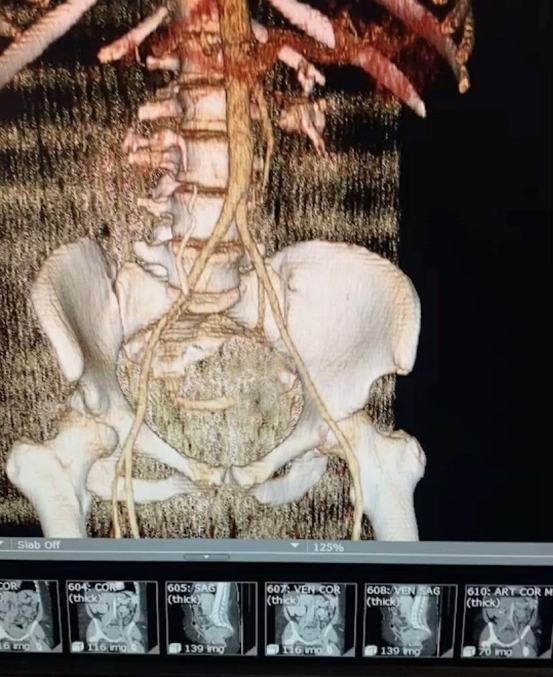
Vortek customized a high-end model that reconstructs 3D vascular dynamic models from pre-surgery CT and X-ray results, integrated directly into the University of Chicago's PACS.

Instead of navigating interventional procedures against flat 2D images, surgeons work from a true 3D view — cutting surgery time by 30–60%, reducing radiation exposure for patients and doctors, and accelerating the training of young physicians. The model has since supported thousands of interventional surgeries.

3D vascular dynamic model reconstructed from CT and X-ray
3D Vascular Dynamic Model · PACS-integrated
30–60%
Reduction in interventional surgery time
1,000s
Interventional surgeries supported
↓ Risk
Less radiation exposure, faster training for young doctors
The Arc

From a bespoke breakthrough to a repeatable platform

The University of Chicago system was hand-built, but the way we built it wasn't a one-off. Label with Cortexa, train with Athanor, deploy a model that runs on-site — that same sequence repeats for almost any imaging problem. Once others saw it work, the requests came from well outside healthcare, and by 2024 we had grown the team to keep pace.

🏥

Medical

Where it started — imaging, interventional surgery, end-to-end

🛣️

Transportation

Imaging & video analytics, surveillance

🏅

Sports

Motion & performance vision models

And beyond

Any vision-heavy, industry-specific use case

Have a vision problem worth solving precisely?

Tell us about your imagery and your use case. We'll bring the data pipeline, the model, and the deployment — end to end.

[email protected]